

Velora — booking intelligence built for wellness and service businesses
Last updated:
Velora is a white-label ready, multi-tenant SaaS platform that lets service businesses — spas, clinics, studios and salons — run their own branded booking workspace without sharing data, settings or customers with anyone else. It replaces the patchwork of calendars, spreadsheets, WhatsApp confirmations and manual payments with one platform: define services, rooms, practitioners and equipment; publish real availability; take bookings through a branded client portal; and run the day from a clean admin console.
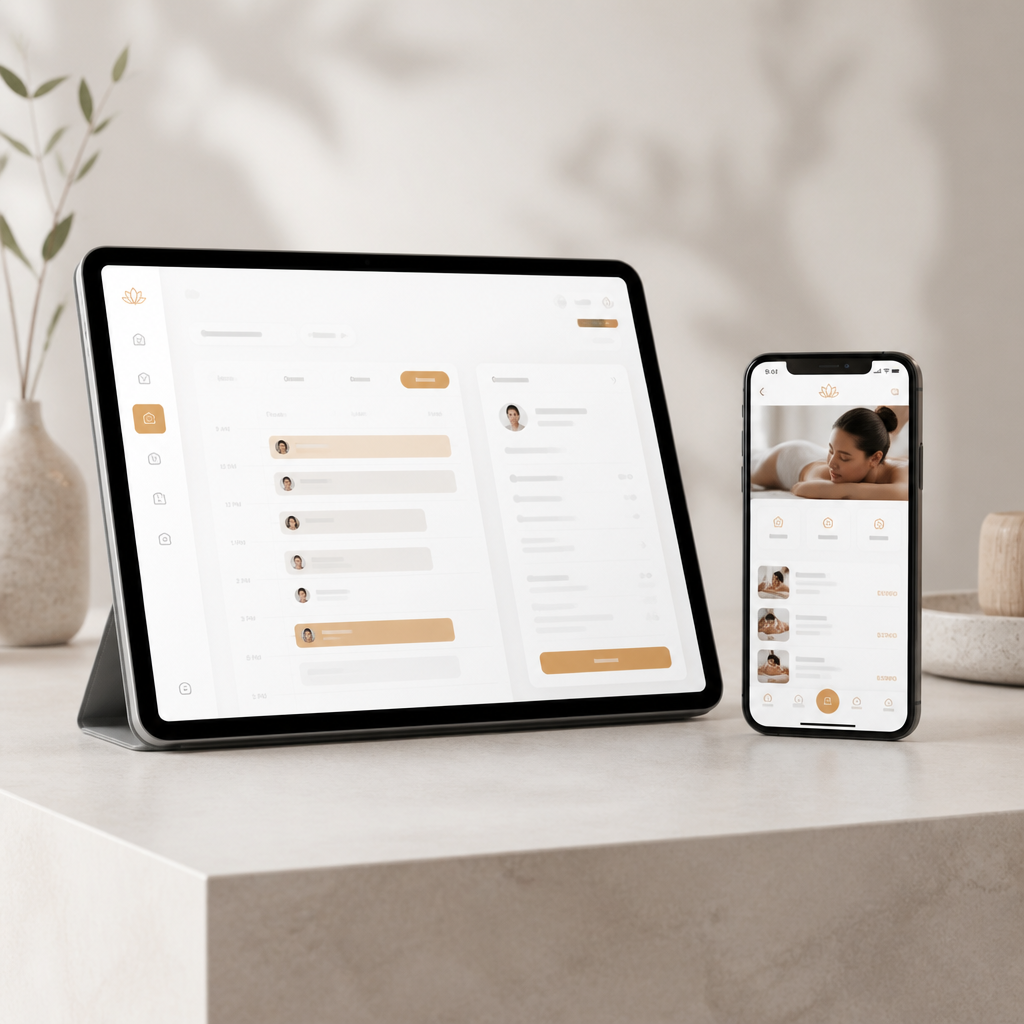
Client & front desk experience
- Branded, mobile-first client booking portal with category-driven discovery
- Date and time selection against real availability, not a static calendar
- Guest checkout plus OTP sign-in for returning clients
- Waitlist join when a preferred slot is full
- Tablet-optimised front desk booking builder with live slot holds
- Client search and create, plus multi-payment checkout at the desk
Operations & scheduling engine
- Rooms, practitioners, equipment and schedules with a resource-mapping matrix
- Availability computed from service duration, room hours and practitioner rosters
- Governing equipment respected so double-booked capacity never publishes
- Session-based packages with expiry tracking and a wallet / ledger
- Cash, card, session credit, split payments and refund workflows
- Automatic waitlist offers plus a notification log for bookings, reminders and alerts
Tenancy, team & insight
- True workspace isolation — data, branding, subdomain and settings per tenant
- White-label controls: logo, colours and booking subdomain
- Role-based access with tenant admin and team invites
- Revenue, occupancy and capacity reporting
- Practitioner performance dashboards
- Edge-ready server functions and tenant-scoped row-level security in Postgres
The problem Velora solves
Most appointment-heavy businesses in the UAE run on three or four disconnected tools at once: a shared Google Calendar for the treatment rooms, a spreadsheet for packages and remaining sessions, WhatsApp for confirmations and reschedules, and a card terminal that has no idea which booking it belongs to. Each tool is individually fine. Together they create a daily reconciliation problem — a client who booked over WhatsApp does not exist in the calendar, a package with three sessions left cannot be verified at the desk, and a cancelled slot silently disappears instead of being offered to the next person waiting for it.
The cost shows up in two places. Capacity goes unsold because released slots are never re-filled, and revenue reporting becomes an end-of-month archaeology exercise rather than a live number. Velora removes the gaps by making the booking the single record that payments, credits, reminders and reports all attach to.
Why multi-tenant isolation matters
Marketplace booking tools put your clients on someone else's platform, under someone else's brand, alongside your competitors. Velora inverts that. Each business is a tenant with its own workspace: its own data, its own branding, its own booking subdomain and its own settings. Nothing is shared or cross-sold between workspaces.
That boundary is enforced in the database, not just in the interface. Velora uses tenant-scoped row-level security in Postgres, so every read and write is filtered by tenant at the data layer. For clinics handling health-related client information in the UAE, keeping data separated and access role-limited is a baseline expectation rather than a feature — Federal Decree-Law No. 45 of 2021 on the Protection of Personal Data requires controllers to apply appropriate technical and organisational measures to the personal data they process.
Availability that reflects reality
A 90-minute hot-stone treatment is not simply a gap in a calendar. It needs a room that is open at that hour, a practitioner who is rostered and qualified, and in many cases a specific piece of equipment that no parallel treatment can be using. Publishing slots that ignore any one of those constraints produces the worst outcome in service operations: a confirmed booking that cannot be delivered.
Velora's availability engine resolves all of those constraints before a slot is ever shown. Service duration, room opening hours, practitioner rosters, existing bookings and governing equipment are combined into a single set of genuinely bookable times. Front desk staff get live slot holds while they build a booking, so two people cannot claim the same room from two different channels.
Packages, credits and payment reality in the GCC
Wellness and clinic businesses in the region sell heavily on packages — ten sessions, a monthly membership, a course of treatments with an expiry date. Handled on a spreadsheet, those balances drift, and disputes at the desk are settled by memory. Velora tracks packages as session credits against a wallet and ledger, so a redemption at the front desk decrements a real balance and appears in reporting.
Payment behaviour is mixed rather than card-only: cash remains common, split payments across a card and a credit balance are routine, and refunds need to be recorded rather than negotiated informally. Velora supports cash, card, session credit and split payments with refund workflows, and businesses registered for VAT in the UAE can reconcile against records the Federal Tax Authority expects to be retained and traceable.
How ID8 delivers Velora
Velora is an ID8 platform asset, built on TanStack Start with React and Tailwind CSS, Postgres for data and authentication, and edge-ready server functions. Because we own the platform, implementations are not limited to whatever a third-party vendor exposes — resource models, service taxonomies and reporting can be shaped to how a specific group actually operates across its branches.
A typical rollout starts by modelling the real operation: services and durations, rooms and their opening hours, practitioners and rosters, equipment constraints, then packages and payment methods. Branding and the booking subdomain are configured per tenant, staff roles are assigned, and the front desk is trained on the tablet console before the client portal goes live.
How we know
Last updated:
Velora was designed by ID8 in Dubai from the operating patterns we saw repeatedly across UAE wellness and clinic operators: shared calendars for rooms, spreadsheets for package balances, WhatsApp for confirmations, and card terminals disconnected from the booking record. The platform's resource-mapping matrix and availability engine exist specifically to model rooms, rosters and governing equipment together, because those three constraints are what make published slots undeliverable when handled separately.
Statistic: The UAE's Federal Decree-Law No. 45 of 2021 on the Protection of Personal Data requires controllers to implement appropriate technical and organisational measures to protect personal data — the reason Velora enforces tenant separation with row-level security at the database layer rather than only in the application interface.
References
Your workspace. Your brand. Your data.
See Velora in action with your own services, rooms and practitioners. ID8 configures the tenant, models your resources and trains your front desk before your branded booking portal goes live.
Common questions.
Can't find what you're looking for? Email us at .
Velora is ID8's multi-tenant booking and scheduling platform for wellness and service businesses. Spas, clinics, studios and salons each get an isolated, white-label ready workspace with a branded client booking portal, a front desk console, resource management, packages and credits, payments, waitlist and analytics.
Wellness centres, medical and aesthetic clinics, fitness and yoga studios, salons and barbershops, and any appointment-heavy service business that needs its own booking identity rather than a listing inside someone else's marketplace.
Every business is a separate tenant with its own data, branding, subdomain and settings. Tenant-scoped row-level security in Postgres enforces the boundary at the database layer, so customers, bookings and settings never leak between workspaces.
Yes. Each tenant controls its logo, colours and booking subdomain, so clients book on the business's own branded portal rather than a generic aggregator page.
Velora computes real bookable slots rather than a static calendar. It combines service duration, room opening hours, practitioner rosters, existing bookings and any governing equipment, then publishes only the slots that can actually be delivered.
Yes. The client portal is mobile-first: category-driven service discovery, date and time selection, guest checkout, OTP sign-in and a waitlist option when a preferred slot is full.
Yes. Velora supports session-based packages with expiry tracking and a wallet or ledger system, so credits can be sold, redeemed at the front desk and reconciled against revenue reports.
Cash, card, session credit and split payments, plus refund workflows so a front-desk correction is recorded rather than handled off-system.
Bookings, reminders and alerts are written to a notification log, and the waitlist automatically offers released slots to the next client, so cancellations are re-filled instead of lost.
Dashboards for revenue, occupancy, capacity utilisation and practitioner performance, so owners can see which services, rooms and practitioners actually drive margin.
Yes. Velora ships role-based access with tenant admin, branding controls and team invites, so front-desk staff, practitioners and owners each see only what they need.
TanStack Start with React and Tailwind CSS on the front end, Postgres for data and auth, edge-ready server functions, and multi-tenant row-level security. It is an ID8 platform asset, not a third-party SaaS dependency.
Yes. Multi-branch groups typically run one tenant per brand with rooms, practitioners and equipment modelled per location, keeping schedules and reporting separate while branding stays consistent.
Book a demo with ID8 in Dubai. We walk through the client portal, the front desk console and the tenant isolation model using your own service, room and practitioner structure.